
RV Inverter vs. Converter
An RV inverter uses battery DC to supply AC equipment. In RV manuals, a converter usually takes incoming AC from shore power or a generator and supplies onboard DC equipment. Some converters also charge the house battery, depending on the model.
Last reviewed November 26, 2026
Check the RV power sourcesIdentify the direction of power flow
When you connect to shore power, the converter can supply the RV’s low-voltage lights, pumps or control boards through the documented DC system. Read its manual to confirm whether it also charges the battery and which profile it uses. RV converter manufacturer FAQ.
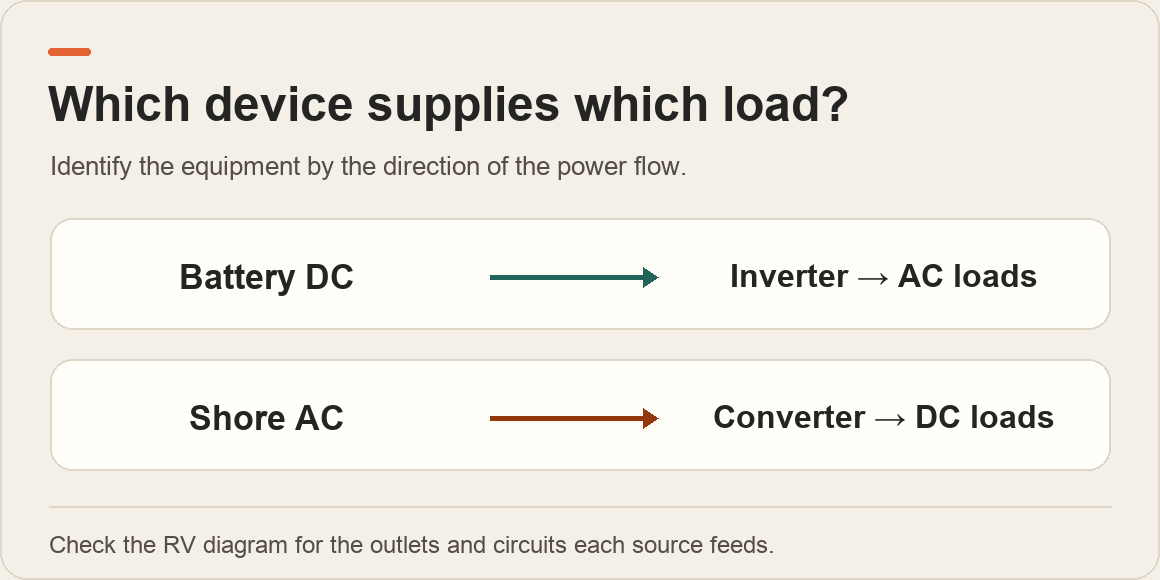
When you are away from shore power, the house battery may still run the lights and other DC loads. An inverter is needed for any AC outlets assigned to battery power. Find those circuits in the RV diagram. An energized DC light gives you little information about the state of an AC outlet.
Find the exact device and circuit
Look at the model label, circuit legend or RV documentation. An inverter specifies a DC input and AC output. A converter specifies an AC input and low-voltage DC output. An inverter/charger documents both functions and may provide transfer features. Example inverter/charger specifications.
| What you want to do | Equipment or information to check |
|---|---|
| Use a plug-in AC appliance while off grid | Inverter output and battery supply |
| Power RV DC loads or charge from shore | Converter or compatible charger documentation |
| Feed the same AC outlets from two sources | RV circuit diagram and documented transfer equipment |
A camper owner asked how to connect an inverter-based system to existing AC circuits. Identify source and circuit assignment before shopping or planning an installation. Original camper discussion.
Decide what needs to change
For a single AC appliance, start with its electrical input, startup requirement and the assigned outlet. For an upgrade involving existing circuits, have an RV technician verify transfer, protection and operating conditions using the exact manuals.
If outlets work on shore but stop when shore power is removed, use the RV outlet checklist to check which outlets are supposed to remain powered. If the unit needs to do both jobs, use the inverter/charger guide to compare its ratings.
Save the inverter or converter model, battery type and outlet designations. Use those records when asking support about a replacement, because similar-looking units can serve different circuits and accept different input power.