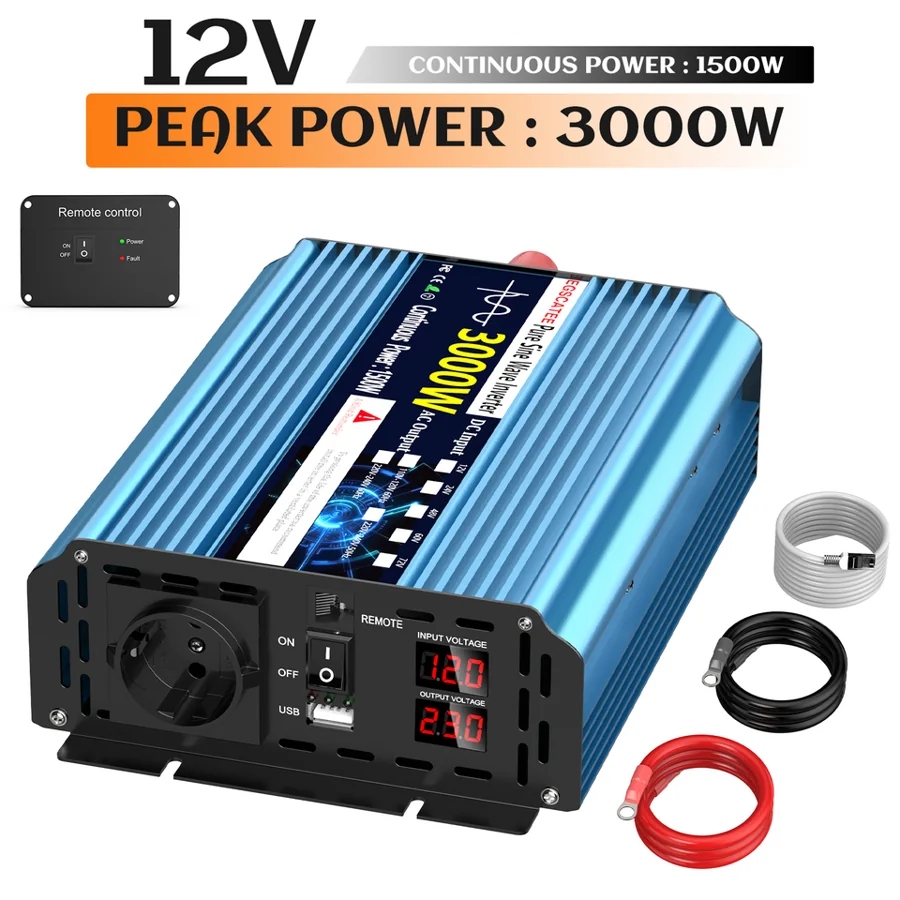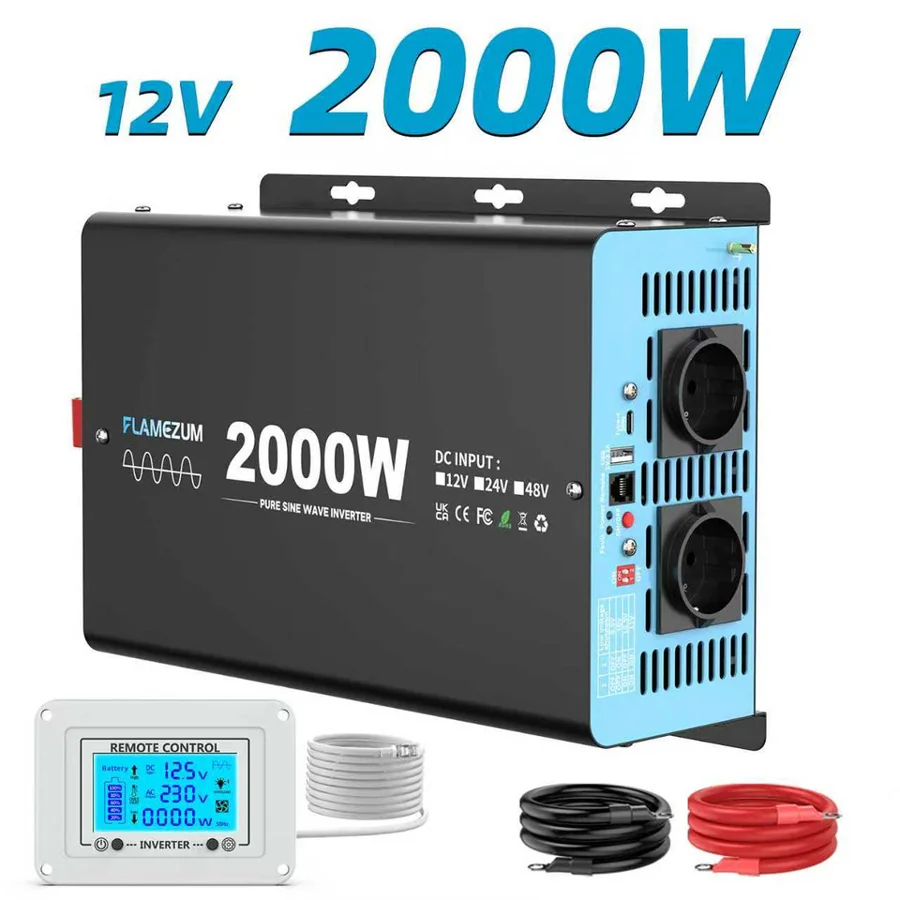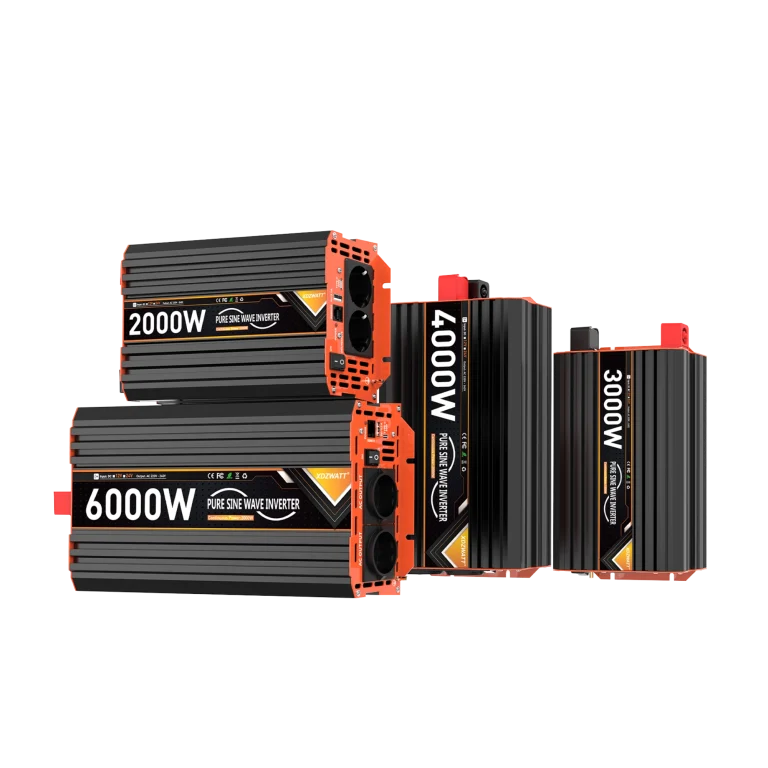
BLE 2000W
Series image
View model
Compare factory-direct car power inverters by connection type, DC input, appliance load and AC outlet.
Check each model’s documentation for the application, power rating and market variant.
| Match these details | 12 V accessory-outlet inverter | Battery-connected inverter |
|---|---|---|
| Connection | Accessory plug approved for the vehicle circuit | Battery or vehicle-approved DC supply using the exact manual |
| DC input | Check socket rating, shared circuit and inverter plug rating | Verify nominal voltage, working input range and available current |
| Load fit | Small AC loads within the remaining power budget | Higher AC demand if battery, installation and outputs support it |
| AC output | Match the exact outlet, volts, hertz and waveform | Also verify per-outlet and total limits |
| Next step | Check the outlet limit | Compare battery-connection requirements |
Start with the vehicle manual and the intended appliance label. A vehicle can have several accessory sockets with different limits or a shared circuit. Volvo cargo socket example.
For a car laptop charger measuring 75 W AC, an inverter at 90% assumed efficiency needs about 83 W DC. A documented 120 W DC outlet would allow about 108 W AC at that efficiency before shared loads and plug limits. Confirm whether the outlet stays powered with the engine off. Check laptop options · Check parked power.
A charger with a supported USB-C car adapter can use DC directly. For devices that require household-style AC, compare the inverter’s exact outlet and the charger’s electrical input.
Add loads that run together and record the largest startup event. At 500 W AC, 12 V under load and 90% assumed efficiency, the DC demand is about 46 A. The supply, cable route and protection must suit the exact inverter and vehicle. DC installation reference.
For example, a refrigerator’s compressor start can change the shortlist even when its running draw is modest. Compare the timed surge and keep the load sizing worksheet with your model enquiry.
For a 12 V to 120 V car inverter, verify both sides of the model label. Some descriptions use 110 V wording. Compare the actual output voltage, frequency and receptacle with the equipment specifications. If the appliance calls for pure sine wave output, match that requirement on the exact variant. Waveform examples.
Start with the BLE 2000W reference and the TK 2000W reference if you are checking battery-connected families. Match the manual and variant to your vehicle before ordering. For an accessory-plug model, request an exact SKU that documents that connection.
Record the vehicle make, model and year, the outlet rating or compatible battery source, the equipment input and your US ZIP code. Use those details to check an offered variant and its order link.
Only when the accessory circuit and inverter plug both support the DC input needed for that output. Check the vehicle and inverter documentation and allow for conversion losses and shared loads.
Record the destination market, quantity, intended load and the required DC input, AC outlet and waveform. Build a brief you can copy for a supplier.