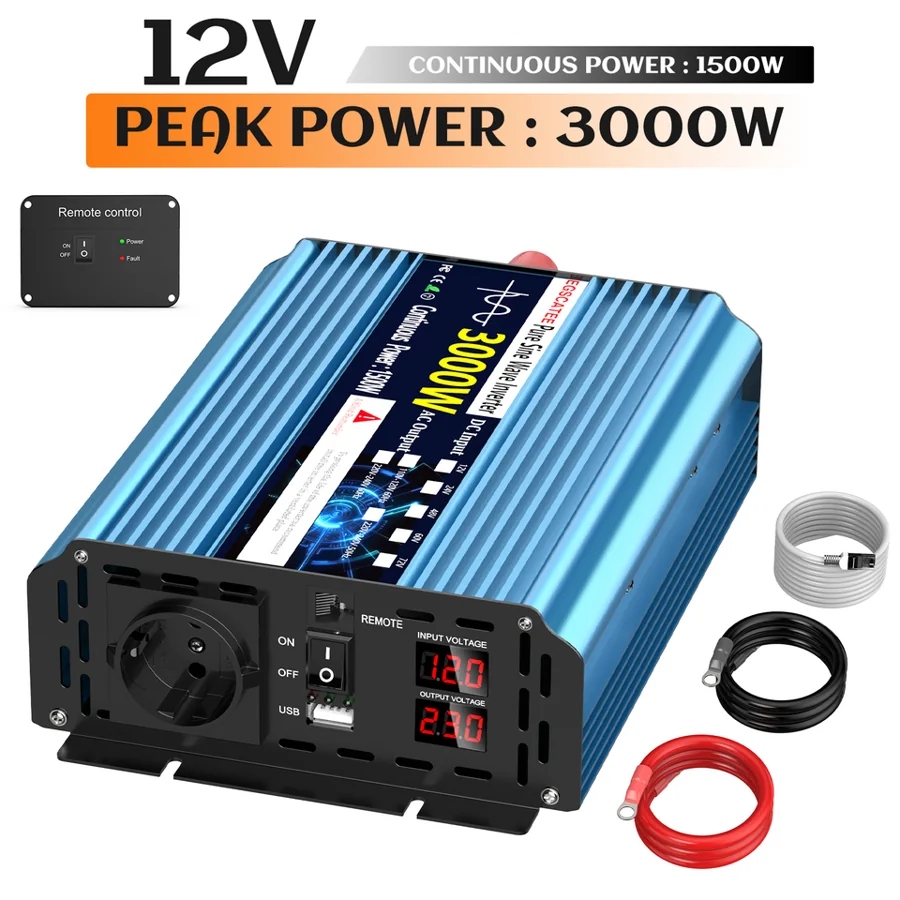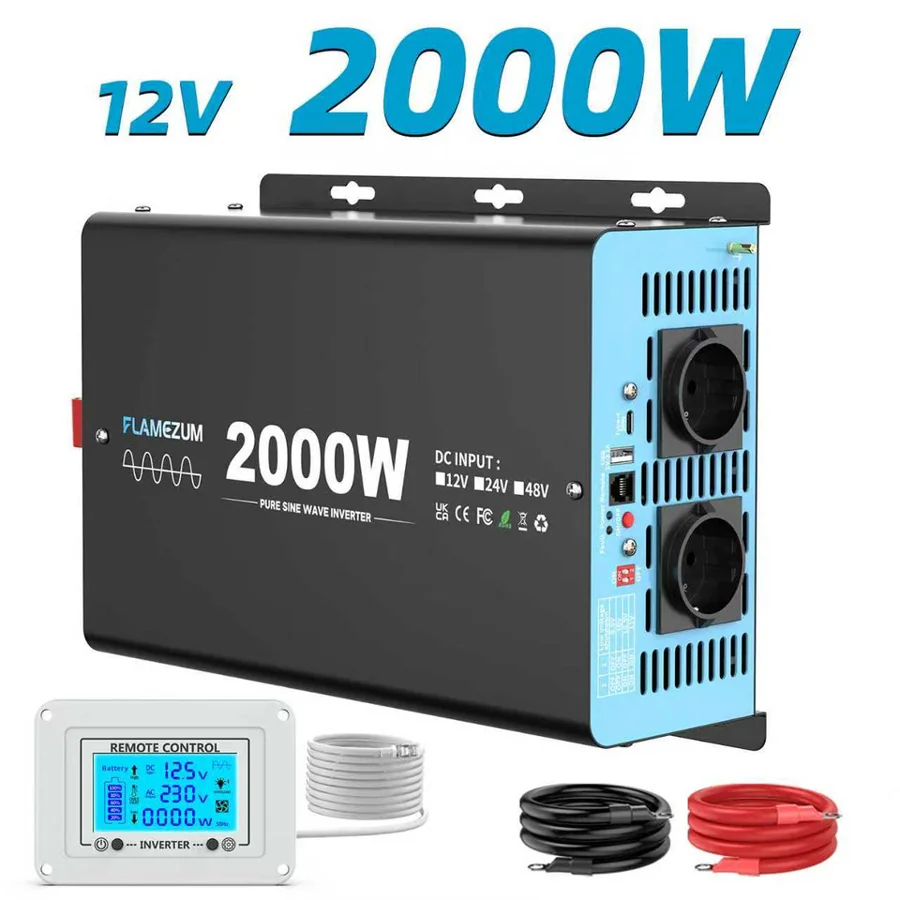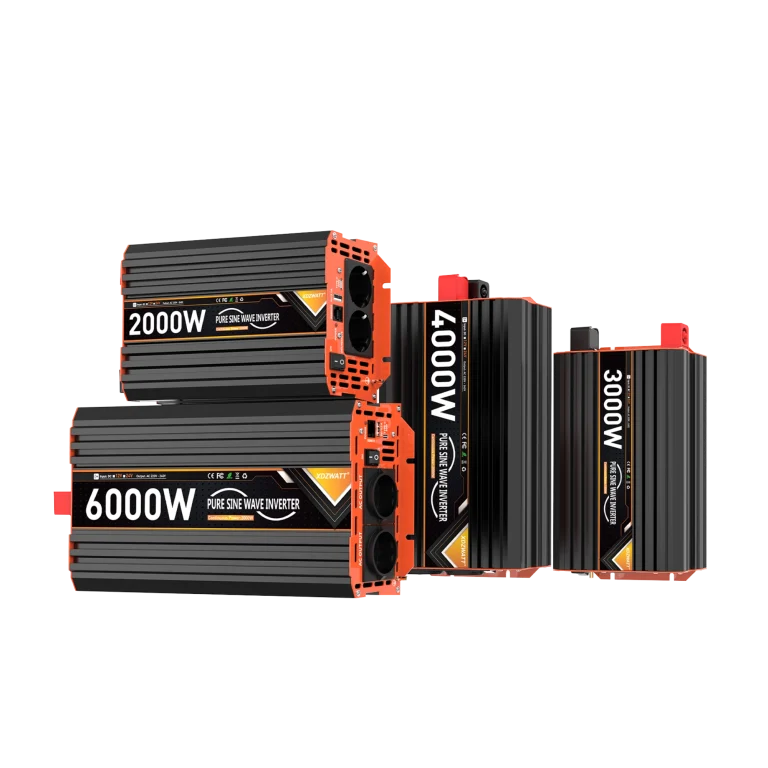
BLE 2000W
Series image
View model
A 24 V inverter takes a compatible 24 V nominal DC supply. Confirm the full operating input range and actual AC voltage, waveform, frequency and socket on the exact variant before choosing.
Check each model’s documentation for the application, power rating and market variant.
Check the battery or approved truck supply voltage while charging and during a load. Compare it with the inverter’s published input range. For an existing 12 V battery system, use the 12 V category. Example input range.
At 1,200 W AC and 90% assumed efficiency, a 24 V source under load supplies about 56 A DC. A 12 V source would supply around 111 A DC for the same load. Verify the battery, charger and DC equipment together. 12 V and 24 V worksheet.
For a US 24 V to 120 V inverter, check outlet, 120 V rating and frequency. For different AC formats, compare the intended load’s nameplate with the regional variant. A model’s pure sine wave output is a separate specification.
Ask for the exact DC voltage range, continuous and surge ratings, connector and local order code. Share any truck auxiliary circuit limit or battery BMS limit that constrains the installation.
The 24 V rating describes the nominal DC input. AC voltage, frequency, socket and waveform depend on the exact variant.
Record the destination market, quantity, intended load and the required DC input, AC outlet and waveform. Build a brief you can copy for a supplier.