
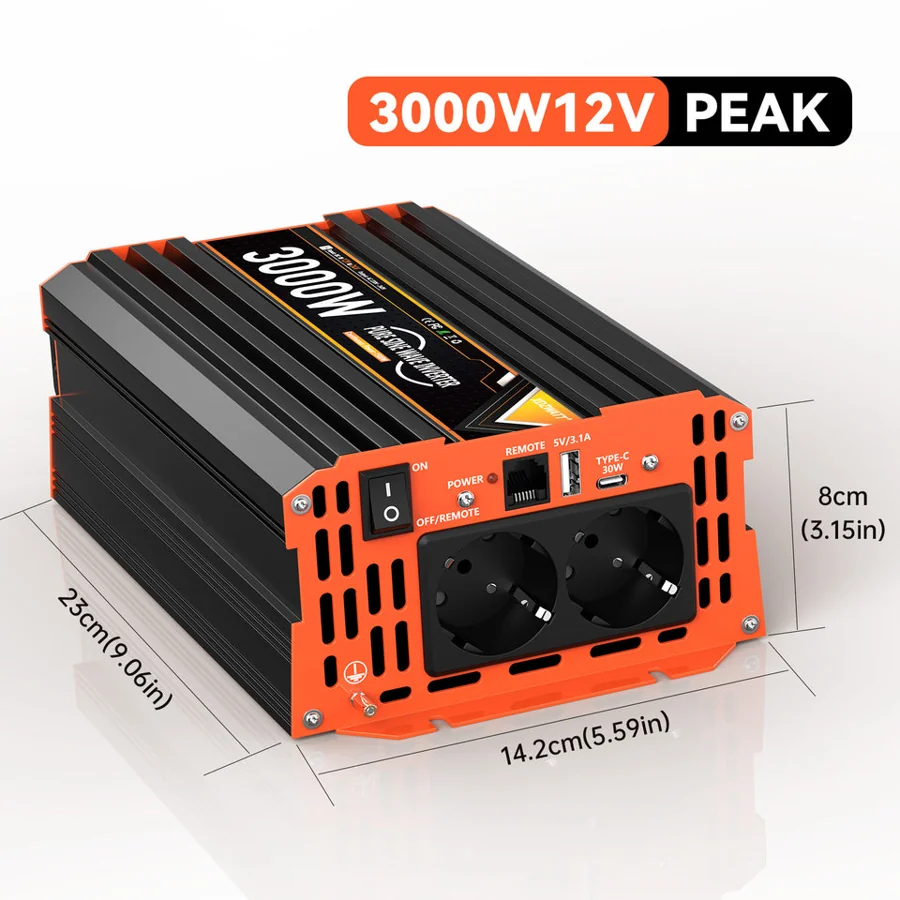
3000 Watt Power Inverters
For a 3,000 watt power inverter, verify 3,000 W of continuous AC output in the exact manufacturer documentation. Then check whether your battery, DC connection and approved AC output can deliver that power at the conditions you expect.
Check each model’s documentation for the application, power rating and market variant.
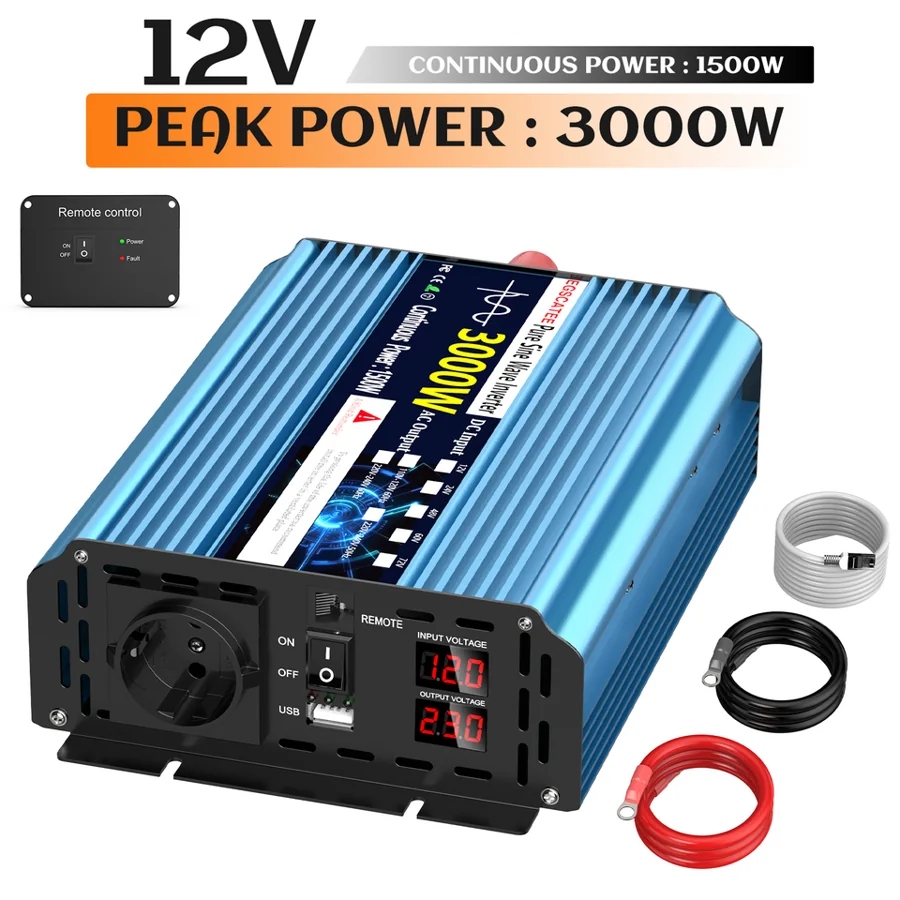
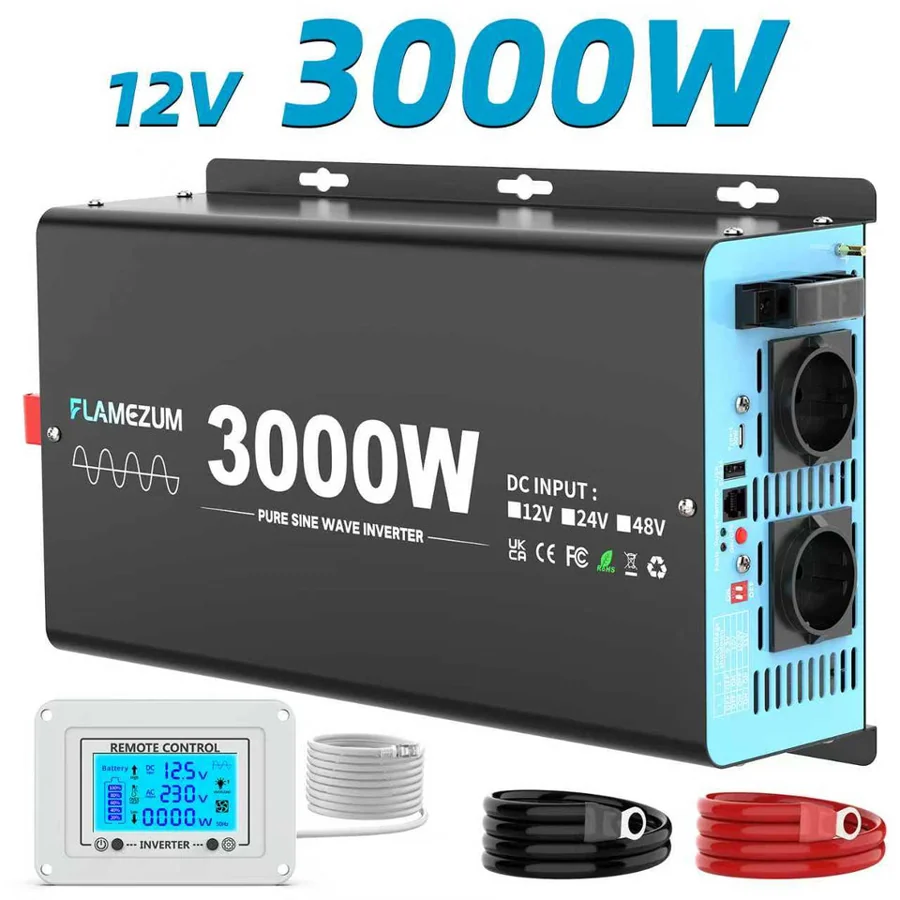
Read continuous power and peak power separately
A 3,000 W peak figure describes a short event. The continuous rating is the line to compare with your AC load that runs over time. Check temperature, cooling and other rating conditions, plus the manufacturer’s limits for motor starts.
A 2,400 W running load and a documented 3,500 W startup event are separate checks. Compare the operating watts with the continuous line, and 3,500 W for the measured or specified time with the candidate’s surge table. Continuous and peak examples.
When comparing a 3,000 W pure sine wave inverter, verify the waveform and continuous rating on the same variant’s specification sheet. Match the appliance’s required voltage, frequency and wave shape. Pure sine wave selection.
Match AC delivery and the battery source
Check how the total output is available and how much any individual socket can supply. A full 3,000 W at 120 V would represent 25 A AC for a unity-power-factor load. A socket or terminal must have a documented rating suitable for the actual load. Example of separately documented outputs.
| Source at full 3,000 W AC | DC estimate at 90% efficiency |
|---|---|
| 12 V under load | 278 A |
| 24 V under load | 139 A |
Ring-fence startup and protection requirements for the exact inverter and battery. The estimates describe operating demand. Follow the manufacturer documentation and use an installer to verify circuit and output limits. Installation reference.
How to read model names that include “3000W”
The FTM 3000W model reference uses that model name. The linked store lists DE/220 V SKUs for 12 V and 24 V input with a suffix containing “1500W–3000W”. Request a US-specific model code and the exact manual’s continuous rating and timed surge before assigning an FTM model to this class. FTM variant data.
Ask for the manual, waveform, 12 V or 24 V DC input, actual outlet and order code for your market. A model belongs in this wattage class when the exact variant documentation supports the continuous rating.
Frequently asked questions
Does a 3,000 W peak label qualify as 3,000 W continuous?
The two values apply to different conditions. Use the documented continuous line at the intended operating conditions to select the wattage class.
References
Prepare an RFQ
Record the destination market, quantity, intended load and the required DC input, AC outlet and waveform. Build a brief you can copy for a supplier.