BLE 2000W
Series image
View model
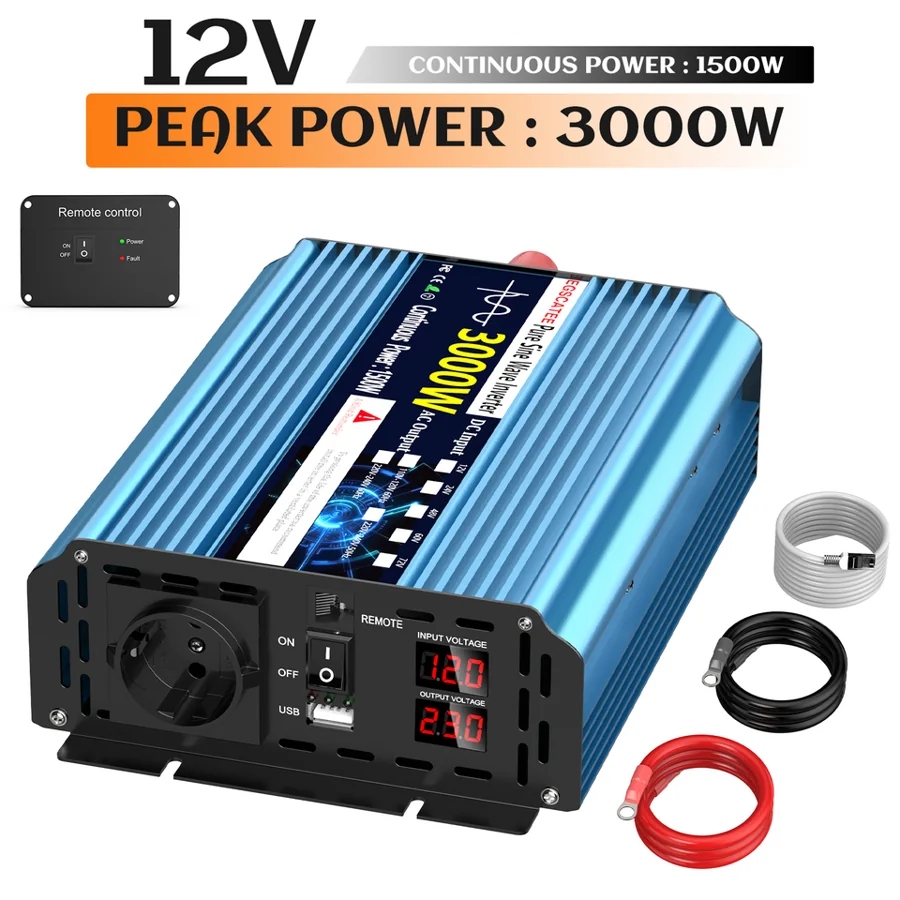
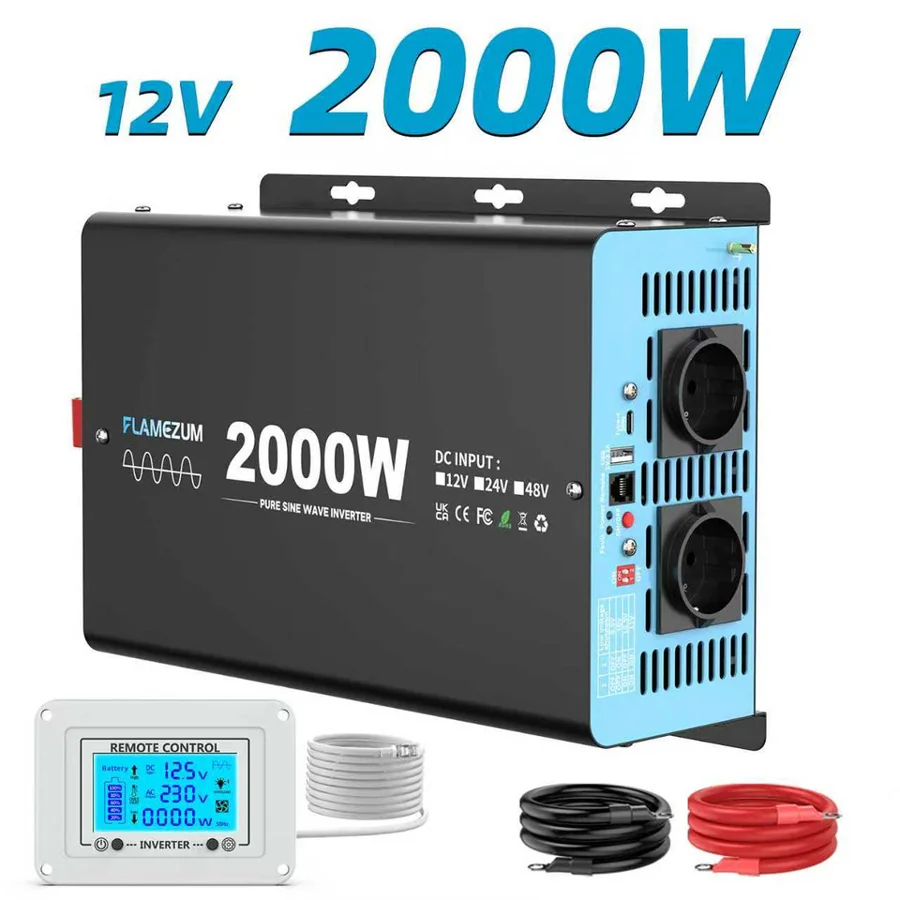
A 12 V power inverter takes a compatible 12 V nominal DC input and produces a specified AC output. If your appliances need 120 V AC, verify voltage, frequency, plug type and waveform on the exact 12 V to 120 V variant.
Check each model’s documentation for the application, power rating and market variant.
Check the input voltage range against the battery under load and while a charger is active. For a vehicle socket, use its separately documented current limit. A 12 V battery label alone provides little information about how much current it can deliver. Input range example.
Some listings describe the output as 110 V. Match the rating printed on the device to the manufacturer’s documented AC output, frequency and socket. For equipment that specifies a sine waveform, verify that on the exact model. Pure sine wave selection.
At 12 V under load and 90% assumed efficiency, the examples below estimate current for planning. Lower loaded voltage or a different efficiency changes the result.
| Illustrative AC output | Estimated DC current | What to compare |
|---|---|---|
| 150 W | 14 A | Check the actual socket and plug limits if using a vehicle outlet |
| 500 W | 46 A | Check supported connection and DC supply |
| 1,500 W | 139 A | Check continuous and startup battery discharge limits |
| 2,000 W | 185 A | See the 2,000 W DC current example |
| 5,000 W | 463 A | Verify high-current supply and actual continuous rating before selecting an installation |
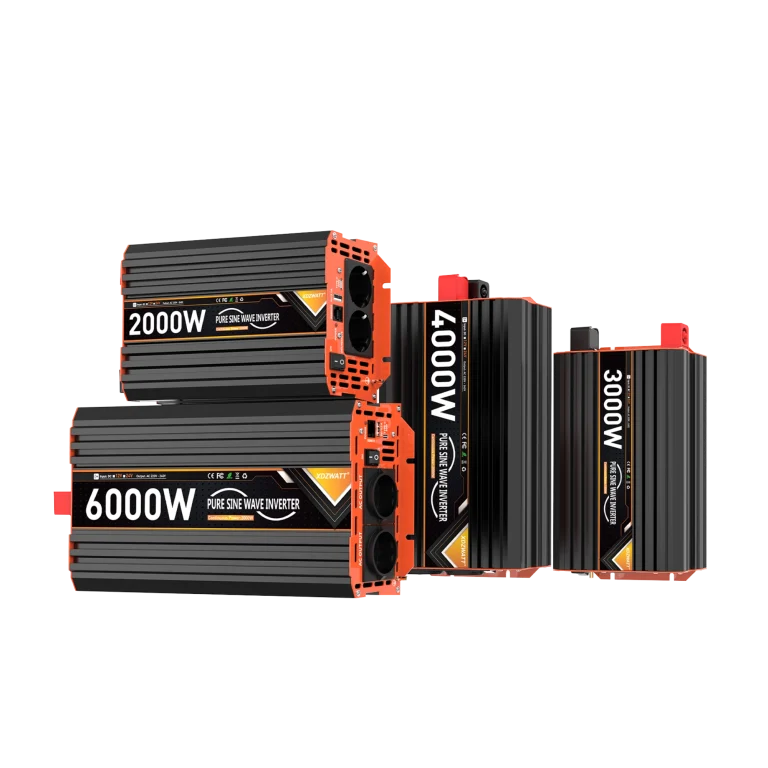
Keep your load list, loaded voltage and battery or vehicle documentation together when comparing variants. For compact car loads, compare car connection options. For larger models, use the wattage comparison and the exact manual.
The 12 V label describes nominal DC input. Check the exact inverter’s AC voltage, frequency, socket and waveform separately.
Record the destination market, quantity, intended load and the required DC input, AC outlet and waveform. Build a brief you can copy for a supplier.