
How to Size an Inverter for a Microwave
Size an inverter for the microwave’s electrical input watts, any starting requirement and other appliances that will run at the same time. Cooking power describes heating output. The AC input requirements belong to the product label or manual.
Last reviewed November 26, 2026
Check input current and startupUse input watts from the appliance label
Read the AC input voltage and rated input watts. If only the cooking output is shown, look up the exact model’s manual before comparison. Include another appliance only if it can actually run at the same time.
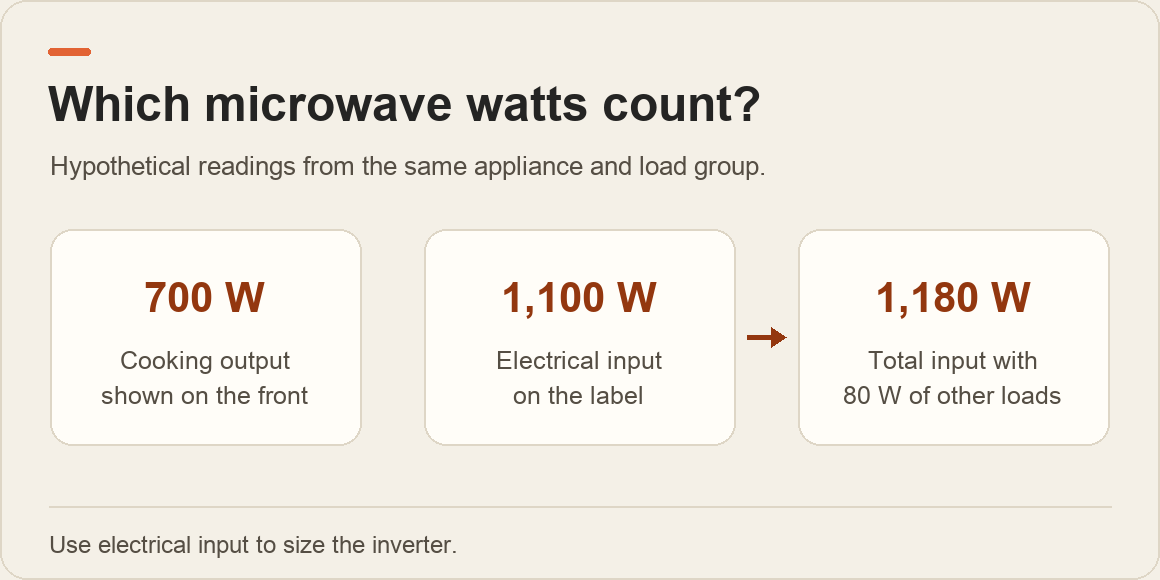
| Illustrative label | What to enter in the worksheet |
|---|---|
| 700 W cooking power | Find electrical input in the manual |
| 1,100 W rated AC input | Enter 1,100 W while the microwave runs |
| 80 W of overlapping loads | Add 80 W and check a 1,180 W running total |
The example values are hypothetical. A driver with a 1,200 W inverter asked what other low-wattage cooking equipment would work. Use the same nameplate method for an air fryer, oven and other heating loads. Original truck discussion.
Match the output and verify any surge
Confirm the inverter’s continuous watts under expected operating conditions. Compare any published appliance startup demand with the inverter’s surge duration and the receptacle rating. Check AC voltage, frequency and waveform in both manuals.
If a microwave powers up without heating, verify that the model works on a normal supply and record the inverter display during the event. An owner reported this symptom on a modified sine inverter. Check waveform compatibility and shutdown symptoms before choosing a replacement. Original microwave discussion · Inverter load guidance.
Check the battery at the planned load
The example 1,180 W AC draws about 109 A at 12 V under load with 90% assumed efficiency. Compare the battery or BMS rating and exact inverter’s supply requirements. A larger inverter label cannot make the battery supply more current.
Take the appliance and inverter model numbers, available DC voltage and intended simultaneous use to the battery selection guide. The truck page lists what to take back to the vehicle documentation.
If 1,180 W approaches the inverter’s continuous rating at its installed temperature, compare a lower-input appliance or remove loads that can run at another time. Base the decision on the model’s specified conditions and the battery’s verified limits.
To make a shortlist, note the cooking appliance model, electrical input label, inverter model, loaded DC voltage and any fault that occurred. These details help distinguish a load limit from an appliance fault and give product support something specific to verify.