
How to Size an Inverter for a Refrigerator
A refrigerator needs an inverter that can support its running power and its compressor startup event. Use measured energy or a realistic duty cycle to estimate backup runtime after checking startup separately.
Last reviewed November 26, 2026
Check refrigerator load compatibilityFind the operating and starting demand
Record electrical input from the refrigerator manual or label, then look for a stated starting requirement. Some labels omit startup information. Ask the appliance maker or have a qualified person measure it with equipment that can capture the brief event.
One Reddit reader asked whether fridge startup could trip an inverter even though its running watts were below the rating. Start and running demand answer different questions. Original refrigerator question · Load sizing guidance.
Compare the startup event at its duration
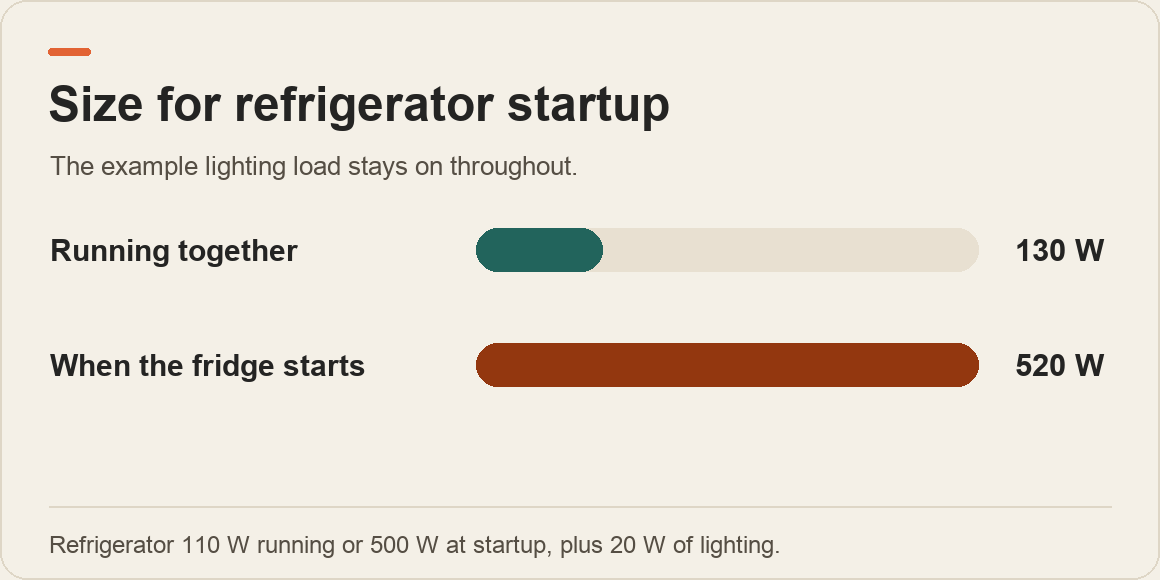
Suppose the fridge runs at 110 W, starts at 500 W, and shares the inverter with 20 W of lighting. The loads total 130 W while running and 520 W during startup. Verify both inverter ratings and the battery’s short-duration discharge capability. These numbers illustrate the method.
Confirm voltage, frequency, and any waveform requirement from the appliance manufacturer. Record the actual inverter output type and the connector used. If the fridge stalls or the inverter trips, note the fault code and check the shutdown guide.
Estimate energy across a representative day
If a measured refrigerator uses 600 Wh AC per day, assumed inverter efficiency of 90% translates that to roughly 667 Wh DC before any independent idle and direct DC loads. Use realistic door openings and room temperature when estimating a cycling appliance.
Plan how power will be replenished before usable battery energy runs out. The runtime guide shows how to handle idle draw and other equipment. Runtime calculation reference.
Plan outage loads by priority
| Priority | What to record | Decision |
|---|---|---|
| Refrigerator or freezer | Startup, running watts and measured Wh | Check startup headroom and energy reserve |
| Lights, router or charging | Operating watts and hours | Decide what can be used together |
| Heating, cooking and pumps | Peak demand, operating hours and connection | Check each large or hardwired load separately |
Power compatible plug-in loads directly through an approved output. A connection to building circuits requires suitable transfer equipment installed by a qualified electrician. Keep the full sizing worksheet and the exact model manual together. Backfeed safety guidance.
If a refrigerator and freezer might restart together when power is restored, include their combined startup event in the worksheet. Use a sequential load plan only if you can reliably control which equipment starts and when. Measure daily energy separately from this startup check.