
Sizing a Work Truck Inverter for Power Tools
Start with the work truck’s documented DC supply and the tools or appliances that run together. The inverter needs enough continuous output, documented startup behaviour and a supported AC connection for the intended equipment.
Last reviewed November 26, 2026
Check truck inverter optionsBuild a list based on the working day
Separate cab loads, cooking and tools. Group equipment that can realistically run at the same time. Copy electrical input values for battery chargers, corded tools and heating appliances from their manuals.
| Work pattern | What to check |
|---|---|
| Laptop and small chargers | Continuous input and the truck’s approved outlet |
| Microwave or air fryer | Electrical input, continuous draw and overlap with other loads |
| Corded saw, motor or compressor | Startup event, duration and outlet rating |
A driver with a 1,200 W truck inverter asked which low-wattage cooking appliances could fit. The cooking load guide gives the label-based worksheet. Original truck question.
Check the largest realistic startup event
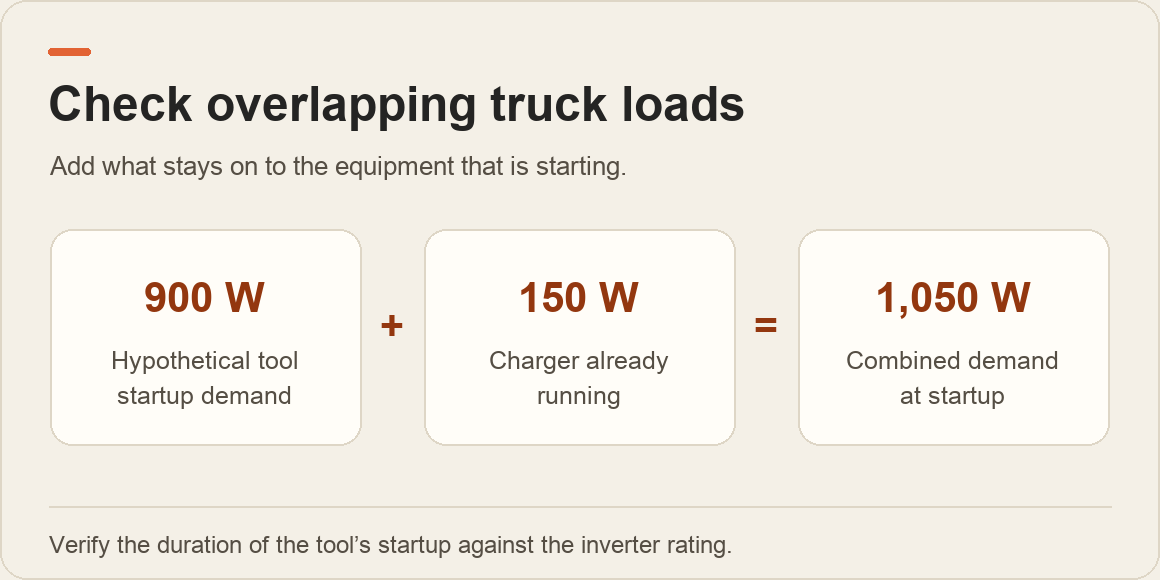
If a tool has a documented 900 W starting event while a charger draws 150 W, compare the 1,050 W combined event with the inverter’s rating for that duration. Use an equipment manual or a qualified measurement when the starting load is unclear.
Find continuous and peak ratings on the same datasheet. Confirm that the relevant outlet can support the load as well. Example industrial inverter specifications.
Verify the truck’s connection and usage conditions
Check the truck maker’s permitted supply, DC voltage and connection locations. If the vehicle has a factory inverter, use its specific manual and fault indicators. For an aftermarket setup, verify operating conditions and protection for the exact variant with a qualified installer.
Write down vehicle model, tasks, running and startup loads, and whether you expect to use the system while parked. Carry those details to the truck inverter page or the shutdown checklist.
If a truck’s existing outlet or factory inverter falls short, compare lower-input equipment and staggered tasks before changing hardware. Choose an aftermarket option after you know both the load you must support and the DC source the truck maker permits.